
By Harold Vance — Independent Veterans Benefits Writer | Reviewed & updated August 9, 2026
Independent and non-government. This site is not affiliated with, endorsed by, or sponsored by the U.S. Department of Veterans Affairs (VA) or any government agency, and it is not a law firm. For official information, visit VA.gov.
Why free legal clinics for veterans exist in the first place
Free legal clinics for veterans exist because the systems that surround a service-connected illness — the VA claim itself, the discharge record behind it, the housing and consumer problems that often arrive alongside it — are complicated in ways that money usually solves and rarely should have to. A veteran diagnosed with mesothelioma decades after working around asbestos lagging on a ship’s steam lines is suddenly asked to reconstruct a service history, understand what a decision review is, read a rating decision written in regulatory shorthand, and do all of it while undergoing treatment. Spouses and adult children end up carrying much of that load. Nobody in that position should have to choose between paying for legal help and paying for the trip to the medical center.
Over the past two decades a patchwork of no-cost legal help has grown up around exactly that gap. Some of it sits physically inside VA medical centers. Some of it lives at law schools, where supervised students take real cases. Some of it runs through state and local bar associations that recruit volunteer lawyers. And a great deal of the day-to-day claims work is handled — free, permanently, and by design — by Veterans Service Organizations whose representatives are accredited by the VA to do it.
This guide walks through what those programs are, how they differ, who they can help, what they generally will not touch, and how to approach one so that your first appointment is productive rather than a scheduling exercise. It is education only. This site does not refer readers to any firm, does not accept referral fees, and has no relationship with any provider mentioned here.

Part 1: What a veterans legal clinic actually is
The phrase covers several different animals, and the differences matter. In the broadest sense, a clinic is any organized program that provides legal services at no charge to a defined population — here, veterans and often their spouses, survivors, and dependents. What varies is who staffs it, what it is allowed to do, and how long it can stay with you.
A clinic staffed by licensed attorneys can generally give legal advice, which is the meaningful line. Advice means applying law to your specific facts and telling you what you should do. Information — what this article provides — means describing how the system works in general. A clinic can cross that line for you; a website cannot.
A clinic may operate in one of three modes. Advice-and-counsel clinics meet with you once or twice, review your documents, explain your options, and send you off to act on your own. Brief-services clinics do a discrete task — draft a letter, prepare a form, make a phone call to a creditor — but do not enter a formal appearance. Full-representation clinics take the matter on and stay with it, which for VA benefits means filing a power of attorney and becoming your representative of record. Most free programs run in the first two modes, because full representation is expensive in staff hours. Knowing which mode you are walking into prevents the most common disappointment.
One more distinction: a clinic is not the same thing as the VA’s own assistance. VA employees at a regional office or a medical center can help you understand a letter, find a form, or check a claim’s status through VA.gov claim status. They cannot represent you, because they work for the other side of the file. That is exactly the space clinics fill.
Part 2: The main categories of free legal clinics for veterans
There are roughly five recognizable families of no-cost legal help, and most veterans end up touching two or three of them.
Medical-legal partnerships (MLPs) place civil legal aid attorneys inside VA medical centers and community-based outpatient clinics. The theory is straightforward and well supported: legal problems make people sicker. An eviction notice, a garnished bank account, or an unresolved discharge upgrade produces measurable stress and interrupts treatment. VA’s homeless programs office maintains a national list of these partnerships at VA Legal Services for Veterans. Because they sit inside the medical center, MLPs are usually the easiest to reach for a veteran already in VA care, and social workers can often make the referral during an appointment.
Law school veterans clinics are teaching programs. Students under close faculty supervision handle real matters — VA claims and appeals, discharge upgrades, benefits denials, sometimes state-level issues like family law or consumer debt. The work product is genuinely good; supervising professors are often former VA practitioners, and the student-to-case ratio means your file gets far more attention than it would elsewhere. The trade-offs are the academic calendar (intake often pauses between terms) and case selection (clinics choose matters that teach well and that they can finish).
Bar association pro bono programs recruit volunteer private attorneys and match them to screened veterans. The American Bar Association’s Veterans Legal Services Initiative coordinates much of this nationally, and nearly every state bar runs some version locally. Volume varies with volunteer supply, so wait times are unpredictable, but the range of matters is broad.
Stateside Legal is a nonprofit online resource built specifically for the military and veteran community. It hosts plain-language explainers, document assemblers, and a searchable directory of local legal aid and veterans programs by ZIP code. It is a starting point rather than a representative, but it is often the fastest way to find out what actually exists near you.
Veterans Service Organizations — VFW, DAV, The American Legion, Vietnam Veterans of America, Paralyzed Veterans of America, and every state department of veterans affairs — are the quiet backbone. Their service officers are accredited by VA, they represent veterans through claims and Board appeals, and they never charge a fee for any of it. For a benefits claim specifically, a VSO is usually the first door to knock on, not the last.
Part 3: Who qualifies, and how clinic screening works
Every free program screens, and understanding the screens saves time. Four filters show up repeatedly.
Service status. Most programs serve veterans regardless of discharge characterization, precisely because bad-paper veterans need help the most. Some funding streams, though, are restricted to particular eras, characterizations, or to veterans enrolled in VA health care. Ask about this on the first call rather than assuming you are excluded.
Income. Civil legal aid organizations that receive Legal Services Corporation funding operate under income ceilings tied to the federal poverty guidelines. Law school clinics and bar pro bono programs often set their own, looser limits. A veteran receiving significant VA compensation may be over the line for a legal aid office and comfortably inside a law school clinic’s criteria.
Subject matter. This is the filter that surprises people. A clinic funded to prevent homelessness may take your eviction but not your rating increase. A clinic built around VA appeals may not touch your landlord at all.
Geography and conflicts. Programs are licensed and funded to serve defined areas, and they run conflict checks like any law office. If they already represent an opposing party, they must decline.
| Program type | Typical scope | Usual limits |
|---|---|---|
| VA medical-legal partnership | Housing, benefits, consumer, family, discharge upgrades | Often tied to enrollment in VA care at that facility |
| Law school clinic | VA claims and appeals, discharge upgrades, selected civil matters | Academic calendar; limited caseload |
| Bar pro bono program | Broad civil range depending on volunteers | Wait times; income screening |
| Accredited VSO | VA claims, decision reviews, Board appeals | Benefits only; not a general civil practice |
Part 4: The accreditation rules behind free legal clinics for veterans
Anyone who prepares, presents, or prosecutes a VA benefits claim on your behalf must be accredited by VA. This is not a formality; it is statute. 38 U.S.C. § 5901 prohibits unaccredited representation, and the implementing regulations at 38 CFR Part 14 — particularly § 14.629 — set out how attorneys, claims agents, and VSO representatives become accredited and what standards of conduct bind them afterward.
The practical consequences for clinic users are worth spelling out. A law student working under supervision may assist with your claim, but the accredited attorney or the accredited supervising practitioner is the one on the file. A well-meaning volunteer lawyer who has never handled a VA matter cannot simply file a brief for you at the Board without going through accreditation first. And a “veterans advocate” who charges you to fill out a claim form without accreditation is operating outside the law — a pattern the Federal Trade Commission and VA’s Office of General Counsel have both warned about.
You can verify anyone’s status yourself, in about a minute, using the VA Office of General Counsel accreditation search. Search by name, by organization, or by state. If the person helping you is not in that database and is preparing a VA claim for you, stop and ask why.
Representation is formalized through a power of attorney: VA Form 21-22 for an organization such as a VSO, VA Form 21-22a for an individual attorney or claims agent. That paperwork controls who receives your correspondence and who may speak to VA about your file, and it can be changed. Our companion guide on how representation paperwork is filed and revoked covers the mechanics in detail.
Part 5: What clinics handle — and what they generally will not
Free programs tend to cluster around a recognizable set of problems, most of which have nothing to do with courtrooms.
- VA benefits claims and decision reviews. Initial claims, supplemental claims, higher-level review requests, Board appeals, dependency and survivor claims.
- Discharge upgrades and record corrections. Applications to a Discharge Review Board or a Board for Correction of Military Records, often the single highest-value thing a clinic can do for a veteran, because a characterization change can unlock decades of benefits.
- Housing. Eviction defense, subsidized-housing terminations, landlord disputes, foreclosure.
- Consumer and debt. Predatory lending, debt collection abuse, credit reporting errors, and questions about which income a creditor may reach.
- Family law. Custody, support, guardianship, and the paperwork that follows a serious diagnosis.
- Estate and incapacity documents. Simple wills, powers of attorney, advance directives — often offered at one-day clinic events.
- Driver’s license and minor criminal record issues that block employment, sometimes through a veterans treatment court.
What they generally will not do is equally important. Free clinics almost never take fee-generating personal injury or product liability matters, because the private bar handles those on contingency. They usually will not handle asbestos trust claims, which are a separate civil process outside the VA system entirely. They do not litigate against the VA in federal district court. Many will not take a matter that is already represented by someone else until that representation is formally withdrawn. And no clinic can promise an outcome — a clinic that does is telling you something about itself.
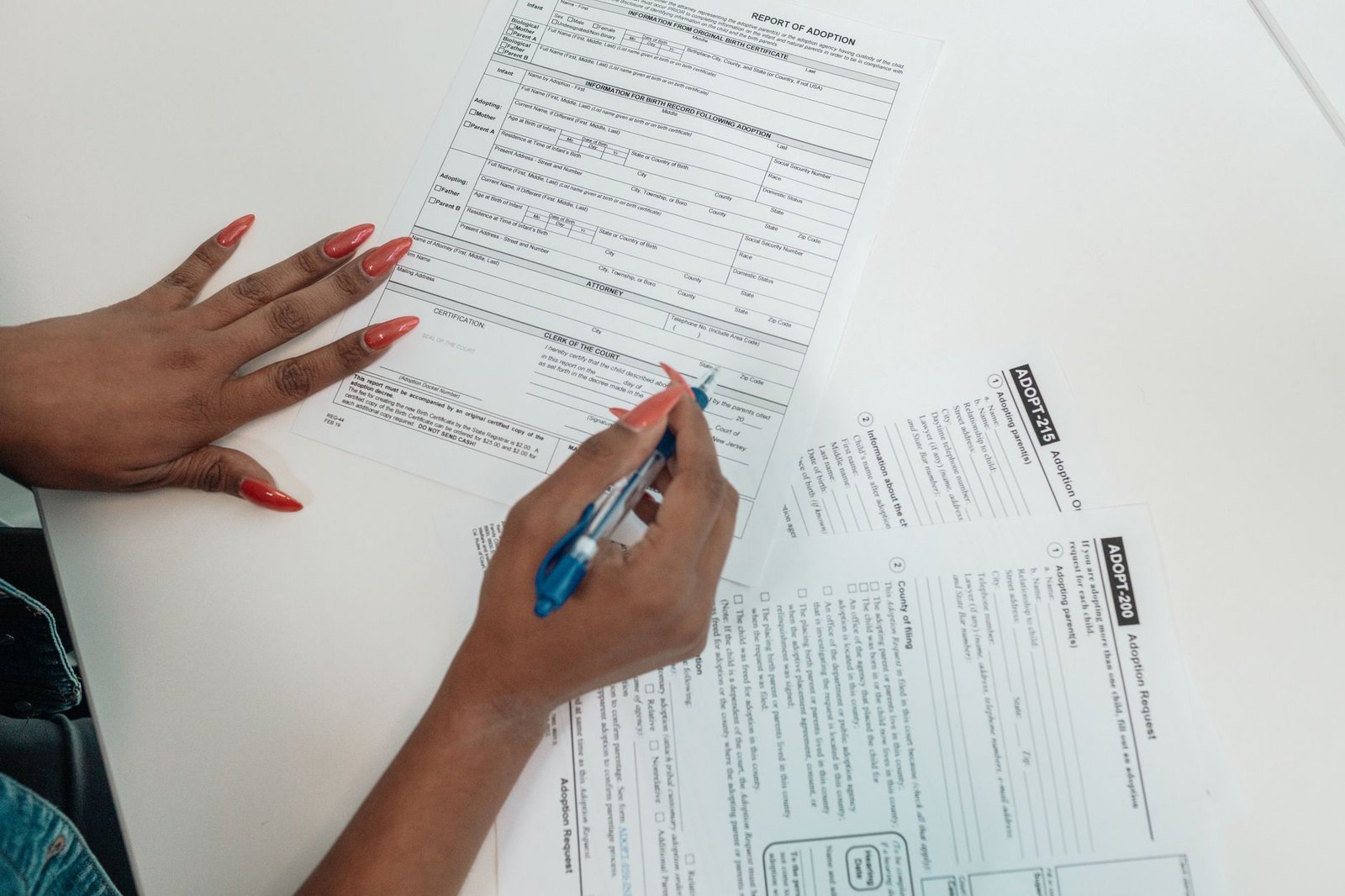
Part 6: Preparing for a clinic appointment so the hour counts
Clinic time is scarce. A veteran who arrives organized often gets substantive help in a single session; a veteran who arrives with a shoebox usually gets a second appointment. The difference is preparation, and it is entirely within your control.
Bring the decision itself. Every VA rating decision comes with a notification letter, a decision narrative, and a list of evidence considered. That last list tells a reviewer more in thirty seconds than an hour of conversation, because it shows exactly what VA had in front of it and — more usefully — what it did not.
Bring your DD-214 and any service records you have, especially anything documenting the work you actually performed. In asbestos-exposure cases, occupational specialty, ship or unit assignments, and job descriptions carry the weight. Bring medical records that establish the diagnosis and its date, including pathology reports, since the diagnosis date drives effective dates and, in serious cases, eligibility for docket advancement.
Bring a one-page timeline. Date of service, dates of exposure-relevant assignments, date of first symptoms, date of diagnosis, date you filed, dates of every VA letter. Reviewers read timelines gratefully.
Bring your questions written down, ordered by importance, and be honest about deadlines. If you have a decision letter dated four months ago, say so in the first two minutes — the whole shape of the advice changes depending on where you sit relative to the one-year window. Our guide to the filing windows that govern each review lane explains why that date dominates everything else.
Finally, bring a second set of ears if you can. Spouses and adult children catch things that a veteran in treatment reasonably misses, and most clinics welcome a family member in the room with your consent.
Part 7: Timing, deadlines, and what a clinic cannot pause
Here is the hard truth about free help: it is free, not instant. Intake queues at a busy legal aid office can run weeks. Law school clinics may not open a file until the semester starts. Bar pro bono matches depend on a volunteer raising a hand.
VA deadlines do not wait for any of that. A rating decision under the modernized review system generally must be challenged within one year of the notification letter, whether by supplemental claim, higher-level review, or a notice of disagreement to the Board. A Board decision carries a 120-day window to file a notice of appeal with the U.S. Court of Appeals for Veterans Claims. Missing those dates does not always end the matter — a later filing may still be possible — but it can cost you the earlier effective date, and effective dates are where the money lives.
So the practical sequence is: protect the deadline first, get help second. Filing an intent to file preserves an effective date while you gather help. Filing a supplemental claim or a review request yourself, on time, is better than filing a perfect one late. A clinic can refine or supplement a filing that already exists; it cannot resurrect a window that closed while you waited for an appointment.
If your circumstances are serious — a terminal diagnosis, advanced age, homelessness, or genuine financial hardship — say so at intake, in those words. Clinics triage, and VA itself has mechanisms to move a case forward faster; our overview of how docket advancement is requested at the Board describes the criteria. Nobody will guess your situation. You have to state it.
Part 8: Common mistakes, red flags, and special cases
Assuming free means lesser. Accredited VSO service officers handle enormous volumes of claims and know regional office practice intimately. Law school clinics under a seasoned supervisor often produce better-researched Board briefs than a general practitioner would. Free is a funding model, not a quality tier.
Signing paperwork you did not read. A power of attorney is a real legal instrument. Understand what you are appointing, and know that it can be revoked or replaced. Only one representative of record can hold your VA file at a time.
Paying someone who should not be charging. No one may charge a fee for preparing an initial claim, and fees for later stages are regulated. If someone asks for money to file your first claim, that is a red flag, not a service. Our explainer on how representation fees are regulated and when they may be charged lays out the rules, including the requirement that fee agreements be filed with VA.
Confusing a clinic with a claims consultant. A growing industry of unaccredited “claim sharks” charges veterans a percentage of retroactive awards for help that accredited representatives provide free. VA and consumer regulators have flagged the practice repeatedly. Verify accreditation before anyone touches your file.
Choosing the wrong review lane. Clinics see this constantly: a veteran requests a higher-level review when the real problem is missing evidence, which that lane cannot consider. Understanding what a senior-reviewer review can and cannot do before you file saves months.
Special cases worth naming. Survivors and spouses often qualify for clinic help in their own right for DIC and accrued-benefits matters. Veterans with other-than-honorable discharges should ask specifically about character-of-discharge determinations, which are a distinct VA process from a discharge upgrade. Veterans living abroad or in rural areas should ask about remote intake, which most programs now offer. And veterans with an unusually strong equitable argument — where VA administrative error caused a loss the regulations cannot fix — should ask whether the Secretary’s discretionary relief authority is worth exploring, though it is rare and not a substitute for a timely appeal.
Frequently Asked Questions
Are veterans legal clinics really free, with no hidden costs?
The legal services themselves are provided at no charge. Some programs ask you to cover out-of-pocket expenses such as certified mail, medical record copying fees, or court filing fees, and they will tell you that up front. Accredited VSO service officers charge nothing at any stage of a VA claim. If a program’s paperwork mentions a percentage of any retroactive award, that is not a free clinic — that is a fee arrangement, and it is subject to VA’s fee regulations.
Can a law student really handle my VA appeal?
Yes, within a supervised structure. Law school veterans clinics operate under faculty supervision, and the accredited attorney supervising the case bears professional responsibility for the work. Students typically carry one or two files at a time, which means your case gets research hours a busy practitioner could not spare. Ask who the supervising attorney is, confirm their accreditation through the VA Office of General Counsel search, and ask how the clinic handles continuity between academic terms.
How do I find a clinic near me?
Start with three places: the VA legal services directory for medical-legal partnerships at your nearest facility, Stateside Legal’s ZIP-code search for local legal aid and veterans programs, and your state department of veterans affairs, which maintains lists of accredited service officers by county. Your VA social worker or patient advocate can also refer you internally. Calling two or three programs rather than one meaningfully shortens your wait.
Will a clinic represent me at a Board hearing?
Some will, some will not. Full representation through a Board hearing is a significant commitment, and programs that offer it usually limit how many such cases they carry. Accredited VSOs represent veterans at Board hearings routinely and at no cost, which is why they remain the most common representative of record. If a clinic offers only advice, ask them to help you decide which hearing option fits your case, then let a VSO carry the representation.
Can a clinic help my spouse or survivor claim?
Frequently, yes. Dependency and Indemnity Compensation claims, accrued-benefits claims, and survivor pension matters are within scope for most programs that handle VA benefits, and clinics recognize that survivors face the same procedural complexity with less familiarity. Bring the veteran’s death certificate, the marriage certificate, the veteran’s most recent rating decision, and any pending claim correspondence. Eligibility screening applies to the survivor’s own household income, not the veteran’s.
What if a clinic turns me away?
Ask why, and ask for a referral. Declines are usually about funding scope, geography, conflicts, or capacity — not the merits of your case. A program that cannot take your housing matter may still advise on your VA claim, and vice versa. Keep a short list going, and in the meantime file whatever preserves your deadline. A timely self-filed request is far more valuable than a perfect filing you never made.
Does using a clinic slow my claim down?
No. Adding a representative does not move you back in any queue. Filing a power of attorney simply redirects correspondence and gives your representative access to the file. The only timing effect worth knowing is that representatives are given a window to review and respond before certain decisions issue, which is a protection rather than a delay. Deadlines run from VA’s notification date regardless of who represents you.
Can I use a clinic and a VSO at the same time?
Only one representative can be your VA representative of record at a time, so you cannot have two powers of attorney on file simultaneously. But you can absolutely have a VSO as your representative of record while consulting a clinic for advice on a non-VA problem such as housing or debt, or for a second opinion on strategy. Many veterans do exactly that. Just be transparent with both, so nobody files something the other did not expect.
Resources
- VA — Legal Services for Veterans, the national directory of medical-legal partnership and free legal clinic sites hosted at VA facilities.
- VA Office of General Counsel — Accreditation Search, to verify any attorney, claims agent, or VSO representative before they touch your file.
- 38 CFR Part 14 (eCFR), the accreditation and representation regulations, including § 14.629 and the conduct standards.
- 38 U.S.C. § 5901 (Cornell LII), the statutory prohibition on unaccredited representation.
- ABA Veterans Legal Services Initiative, which coordinates pro bono programs and maintains state-level resources.
- VA Decision Reviews and Appeals, the official explanation of the three review lanes and their deadlines.
- U.S. Court of Appeals for Veterans Claims, for the 120-day appeal window and self-represented litigant resources.
- Accredited service officers at no cost: VFW, DAV, The American Legion, Vietnam Veterans of America, Paralyzed Veterans of America, and your state department of veterans affairs. Every state maintains a county-level service officer roster.
- Stateside Legal, a nonprofit self-help and directory resource built for the military and veteran community.
Final Thoughts: Help exists, and asking for it is not a concession
Veterans who spent careers fixing things themselves tend to treat asking for legal help as an admission of something. It is not. The VA benefits system is administered by professionals who read regulations for a living; meeting it with a representative who does the same is simply matching the tools to the job. That the help costs nothing is a policy choice Congress and the legal profession made deliberately, precisely so that a diagnosis would not decide who gets a fair hearing.
If you take three things from this guide, take these. Verify accreditation before anyone works on your claim — it takes a minute and it is the single best protection available. Protect your deadline yourself, today, rather than waiting for an appointment that may be weeks out. And call more than one program, because capacity, not merit, is what usually determines who says yes.
The people staffing these programs — the legal aid attorney down the hall from the oncology clinic, the professor supervising six students, the county service officer who has filed a thousand claims — chose this work. Let them do it.
Legal disclaimer: This article is for general information only and is not legal advice and does not create an attorney-client relationship. Consult a VA-accredited attorney, claims agent, or a Veterans Service Officer (VSO) about your specific claim.
Medical disclaimer: This article is for informational purposes only and is not medical advice, diagnosis, or treatment. Consult a licensed physician or your VA care team about your specific situation.